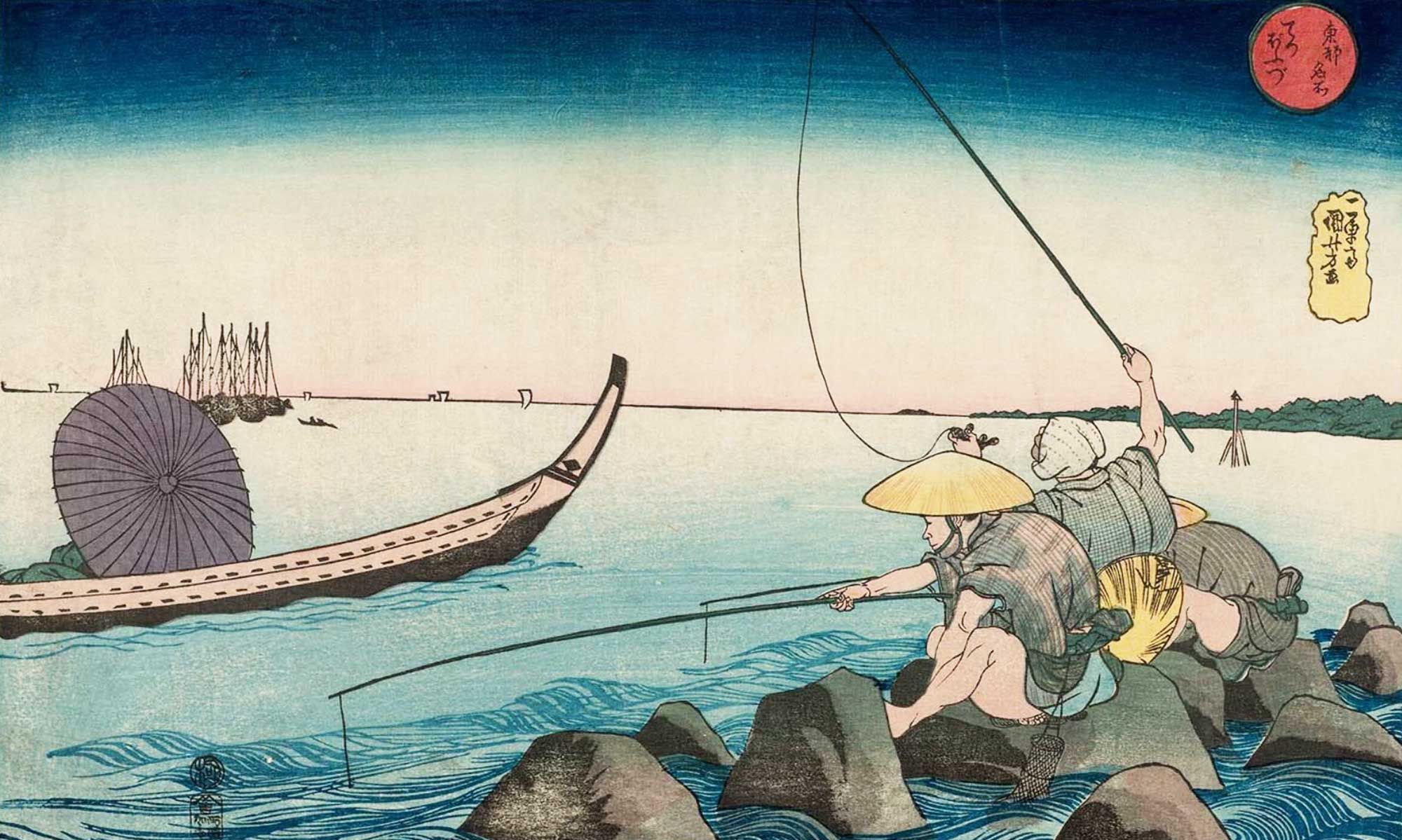
Kawaguchi and Wazao
Kawaguchi area of Saitama prefecture used to be a major hot bed for bamboo harvest until 1960’s. Rapid economic growth of Japan pushed for commercial and residential development of Kawaguchi area and today, those bamboo trees have become a rare find in the area. Most bamboo used for wazao today are harvested in Kyushu, a southwestern part of Japan
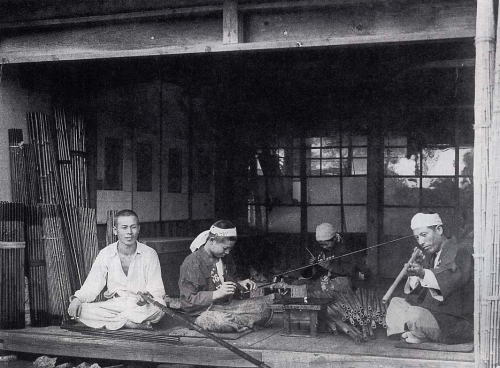 Wazao Shokunin of Kwaguchi area in early 1950’s
Back in the days, it is said there were over 200 wazao shokunin in Kawaguchi, and produced over half a million wazao annually. Many of them made good living. Supplying to ever growing baby boomers after World War 2, and even sold many rods to US occupation forces. Then, with the introduction of mass-produced glass fiber rods, then affordable, carbon fiber rods, wazao industry declined steadily. Today, there’s only a handful of wazao shokunin left, and it appeared as though this breed of skillful craftsmen would die off… then something unexpected happened.
Many people who grew up with fishing with wazao, after decades of trying many different modern fishing rods and fishing methods, began returning to wazao. They all say the same thing. “There’s nothing like the elegance of fishing with a wazao”.
Yamano Family
Bamboo rod building traditions of the Yamano family started with Masayuki Yamano’s grandfather “Kihei”, who was born in 1911. Along with Kihei, his older and younger brothers also trained to build wazao.
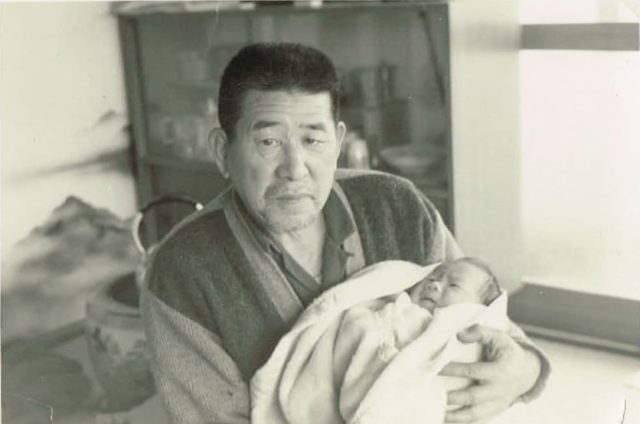 Kihei Yamano, holding his grandson Masayuki in 1966
Kazuo Yamano, Masayuki’s father and his two brothers started training under the guidance of Kihei and his uncles at age of 15 in 1952. In 1957, Kazuo and his 2 brothers established “Saosho” as a brand which would represent their work.
Masayuki Yamano, was born into this wazao building family in 1966. He grew up being surrounded by bamboo, rod building tools and wazao. Seeing the decline of the industry, Masayuki decided to become a program engineer, but eventually he felt it wasn’t the right place for him. When Masayuki was at age 29, he decided wazao building is in his blood and no matter how difficult the life, he would pursue it. Masayuki became apprentice to his father and trained to become a wazao shokunin.
Kazuo Yamano, Masayuki’s father passed away in 2009, and in the same year, Masayuki was awarded the honorific title, “Certified Traditional Craftsman” (埼玉県伝統工芸士) by the Saitama prefecture. Then is 2010, Masayuki was approved by others to take over the brand “Saosho”.
With increasing recognition, demand and popularity of wazao from domestic market and from over-seas, Masayuki Yamano established a new brand of his own, “Yamano” in 2017.
 Masayuki Yamano in 2017